
How We Manage Pain-Free Dentistry at Trusmile Dental Clinic
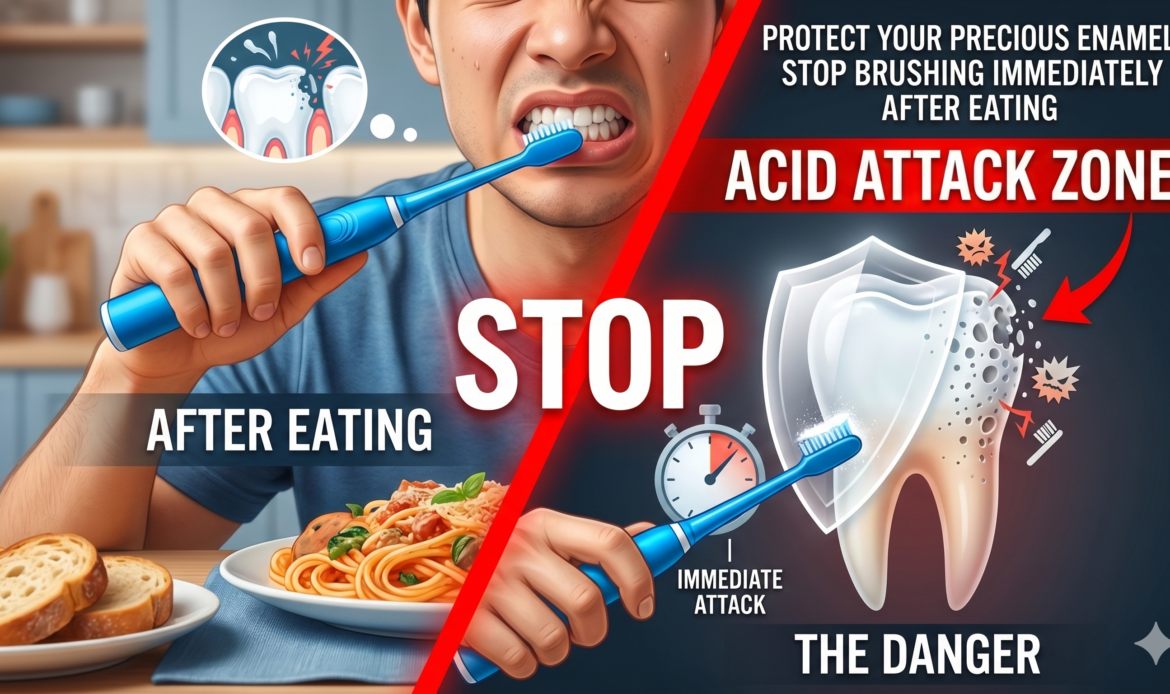
Brushed right after dinner? That “clean feeling” might be harming your teeth.
Sounds strange, right? Most people feel more responsible when they brush immediately after eating, especially after mithai or a heavy meal. But here’s the twist: brushing too soon can actually damage your enamel.
At Trusmile Dental Clinic, Chandkheda, this is one of those habits patients think is healthy, but actually isn’t.
What really happens after you eat?
When you eat food, especially acidic items like citrus fruits, soft drinks, or tomatoes, your mouth becomes temporarily acidic. This weakens the outer layer of your teeth, known as Tooth Enamel.
At this stage, enamel is softer than usual.
So why is immediate brushing harmful?
Brushing right away means scrubbing a softened surface.
* Enamel can wear down faster.
* Microscopic damage builds over time.
* This leads to sensitivity and dull-looking teeth.
Basically, instead of protecting your teeth, you’re unintentionally eroding them.
What should you do instead?
Here’s a simple solution:
* Wait at least 30 minutes after eating before brushing.
* Rinse your mouth with water immediately after meals.
* Chewing sugar-free gum can help neutralize acids.
This allows your saliva to naturally restore the mouth’s pH and re-harden enamel.
“But doctor, I feel unclean if I don’t brush!”
That’s understandable. That fresh feeling matters.
Here’s a practical approach many patients around New CG Road and Sneh Plaza Road follow:
* Rinse well after meals.
* Brush at the right time, not immediately.
* Maintain consistency rather than overdoing it.
Why this small habit matters
Enamel doesn’t grow back. Once it’s worn away, it’s gone for good.
Most sensitivity issues seen at Trusmile aren’t because people don’t brush, but because they brush too aggressively or at the wrong time.
—
Final thought
Good oral hygiene isn’t just about *how often* you brush, but also *when* you brush.
So next time you finish a meal, pause for a bit.
Your enamel will thank you for it.
Patients coming from Chandkheda, New CG Road, and Sneh Plaza Road usually have the same experience after undergoing treatment at our clinic:
“Doctor, pain toh bilkul nahi hua.”
So, how do we do it?
- Correct Diagnosis Before Treatment
Pain-free dentistry begins **before** the procedure. A proper clinical examination and digital X-rays enable us to identify the problem. Once we know the cause, the procedure becomes smoother and more predictable—no surprises, no pain.
- Gentle and Adequate Anesthesia
Injections are feared more than treatment by many patients. We practice anesthesia techniques that make the injection painless. After the area is properly anesthetized, procedures such as fillings, root canal treatments, or extractions can be performed painlessly.
- Modern Equipment & Techniques
Modern dentistry has undergone many changes. Modern equipment minimizes pressure, vibration, and treatment time. Short treatment procedures mean less pain and faster recovery.
- Step-by-Step
You feel less afraid when you understand what’s going on. We take the time to explain what we’re doing, step by step, and we never hurry. As we say, દર્દ વગરની સારવાર શક્ય છે.
- Emphasis on Patient Comfort
Proper positioning of comfortable chairs, taking breaks during the treatment process, and following instructions on post-procedure care are all important in ensuring that pain is kept to a minimum even after you leave the clinic.
Why Pain-Free Dentistry Matters
When dental work is comfortable, patients do not procrastinate. Early treatment prevents larger problems, preserves natural teeth, and prevents emergencies. At Trusmile Dental Clinic, pain-free dentistry is not something we promise. It’s our routine practice.