
How We Manage Pain-Free Dentistry at Trusmile Dental Clinic
Most people visit the dentist expecting to talk about cavities, cleanings, or maybe wisdom teeth. Very few think that a routine dental checkup could reveal signs of a serious sleep issue.
But in 2026, dentists are often among the first healthcare professionals to notice possible signs of sleep apnoea.
At Trusmile Dental Clinic and Implant Centre, many patients from Chandkheda are surprised when a regular dental visit leads to a conversation about snoring, poor sleep, fatigue, or breathing problems at night.
Why does this happen?
Because the mouth provides clues long before many realize something is wrong.
During a dental examination, dentists pay close attention to the tongue size, jaw position, airway space, wear patterns on teeth, gum health, and the soft tissues in the mouth. Certain signs can indicate obstructive sleep apnoea, a condition where breathing repeatedly stops or slows during sleep.
One common clue is excessive teeth grinding.
Many patients believe grinding happens only due to stress or anger after dealing with traffic near New CG Road in Ahmedabad. But nighttime grinding can also be linked to airway blockage. When breathing is disturbed during sleep, the body sometimes responds by clenching or grinding the teeth.
Another important sign is a scalloped tongue, which has wavy indentations along the edges. Dentists may also notice a narrow airway, enlarged tongue, dry mouth, or redness in the throat caused by breathing through the mouth and snoring.
Even cracked teeth, worn enamel, and jaw pain can sometimes relate to poor-quality sleep.
And here’s the concerning part: many people with sleep apnoea don’t even know they have it.
They just feel tired all day, wake up with headaches, struggle to concentrate, or disturb their partner with loud snoring. Some blame work stress, late-night IPL matches, or too much chai instead of recognizing that their sleep is interrupted hundreds of times each night.
Today’s modern dentistry is not just about teeth. It’s becoming more connected to overall health, particularly breathing and sleep quality.
If dentists suspect sleep apnoea, they might recommend further evaluation with a sleep physician or suggest a sleep study. In some cases, specially designed oral devices can help manage mild to moderate sleep apnoea by improving airway positioning during sleep.
As they say in Gujarati, “Sharir sanket aaptu hoy che, bas samajvani jarur hoy.” Sometimes the first warning about a sleep disorder doesn’t come from the bedroom; it comes from the dental chair.
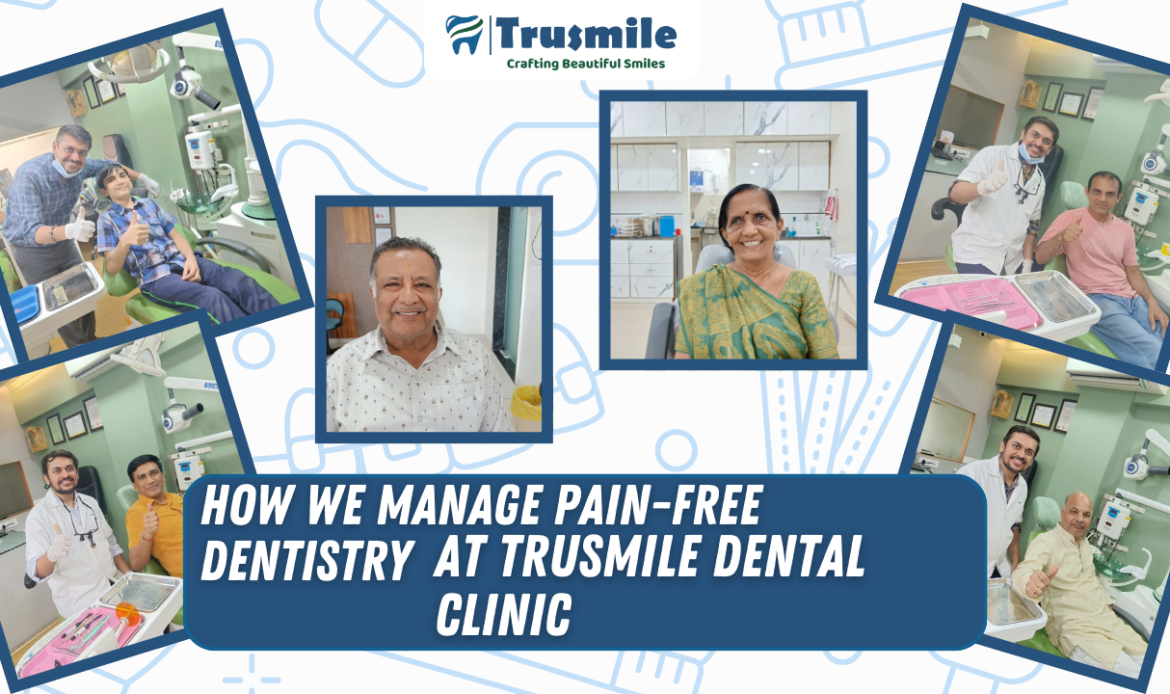
Patients coming from Chandkheda, New CG Road, and Sneh Plaza Road usually have the same experience after undergoing treatment at our clinic:
“Doctor, pain toh bilkul nahi hua.”
So, how do we do it?
- Correct Diagnosis Before Treatment
Pain-free dentistry begins **before** the procedure. A proper clinical examination and digital X-rays enable us to identify the problem. Once we know the cause, the procedure becomes smoother and more predictable—no surprises, no pain.
- Gentle and Adequate Anesthesia
Injections are feared more than treatment by many patients. We practice anesthesia techniques that make the injection painless. After the area is properly anesthetized, procedures such as fillings, root canal treatments, or extractions can be performed painlessly.
- Modern Equipment & Techniques
Modern dentistry has undergone many changes. Modern equipment minimizes pressure, vibration, and treatment time. Short treatment procedures mean less pain and faster recovery.
- Step-by-Step
You feel less afraid when you understand what’s going on. We take the time to explain what we’re doing, step by step, and we never hurry. As we say, દર્દ વગરની સારવાર શક્ય છે.
- Emphasis on Patient Comfort
Proper positioning of comfortable chairs, taking breaks during the treatment process, and following instructions on post-procedure care are all important in ensuring that pain is kept to a minimum even after you leave the clinic.
Why Pain-Free Dentistry Matters
When dental work is comfortable, patients do not procrastinate. Early treatment prevents larger problems, preserves natural teeth, and prevents emergencies. At Trusmile Dental Clinic, pain-free dentistry is not something we promise. It’s our routine practice.